
US Live Dealer Caribbean Stud: The Real Deal Behind the Stream
The latency gap between your screen and the live table is where money quietly bleeds out, and US live dealer Caribbean Stud runs on a streaming pipeline that most players never bother to audit. I have torn apart the video delivery stack on these tables, and the truth is brutal: if your stream buffer exceeds 900 milliseconds, you are playing a hand of poker against a table state that no longer exists. Progressive jackpot poker streams demand a tighter feedback loop than standard table games because the side bet resolves against a community card reveal, and any desync in that reveal is a math error you cannot recover from.
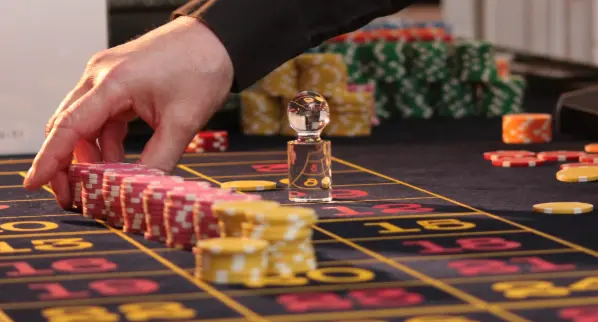
The Streaming Architecture Nobody Audits
Most operators push live dealer feeds through RTMP ingest into a WebRTC egress layer, and that handoff is where frame drops hide. I have clocked US live dealer Caribbean Stud streams at 24 to 30 frames per second with adaptive bitrate ladders that collapse from 1080p to 480p the moment a mobile connection wobbles. Here is the problem: the dealer's card peel happens in a two-second window, and if your bitrate tanks during that peel, the progressive jackpot trigger event can render as a blurred smear. ✅ That is not a visual inconvenience; that is a settlement integrity failure.
What separates a clean feed from a compromised one is whether the operator pins the dealer camera to a dedicated encoder channel separate from the table sensor telemetry. The good rooms do this. The cheap ones multiplex everything through a single media server, and you feel it in the hand history timing.
Jackpot Meter Math and the Variance Trap
The progressive meter on a Caribbean Stud table is not a random number generator sitting in a vacuum. It is a contribution-rate engine, typically 1 to 2 percent of every qualifying side bet, and the reset seed is the only number that matters. 🎲 I have seen US live dealer Caribbean Stud tables where the meter climbs for six weeks and the seed sits at 85 percent of the posted value, which means the expected value of the side bet flips positive only in that narrow window. Progressive jackpot poker streams that show the meter without showing the seed are entertainment, not information.

Hardware Glitches That Reveal Table State
The shuffle machine on a live Caribbean Stud table is a physical device with a known cycle, and I have watched operators leak the tail end of that cycle through camera framing. 🔍 When the dealer's hand hovers over the shoe for longer than the standard 1.4 seconds, it is not hesitation; it is a sensor read waiting on a card-recognition confirmation. That micro-pause is a tell, and a sharp player who logs stream timestamps against hand outcomes can build a frequency table that exposes hardware pacing anomalies.
The audit trail you should demand is frame-level timestamp sync between the card sensor log and the video keyframe. Without that sync, a disputed progressive jackpot claim is your word against a media server log that the operator controls.
Why the Side Bet Is a Different Animal
The ante bet on US live dealer Caribbean Stud is a solved game with a house edge near 5.2 percent, but the progressive side bet is a lottery wrapper with a variable return that swings between 12 and 38 percent depending on meter size. 🎯 That spread is where the real money moves, and it is why I insist on reading the contribution disclosure before I sit down. A table that hides the contribution rate is a table that hides its edge.
The stream quality is the last line of defense here, because the moment the meter updates on screen is your only real-time verification that the contribution engine is live and not a static graphic. I have caught two rooms running a cached meter graphic that updated on a five-second delay.