
SAS Protocol Command Signal Interception: Auditing Electronic Table Feeds
The SAS protocol is not a suggestion — it is the absolute law of the slot floor, and if you are not intercepting its command signals at the hardware layer, you are auditing blind. Every electronic table game, every shuffler, every progressive controller speaks this language, and the moment you stop trusting the vendor's event log is the moment you actually start understanding what is happening on your floor. The SAS Protocol Command Signal Interception methodology is not theory — it is survival for any operator who wants to stop bleeding money through silent meter drift and phantom hand-pay events.
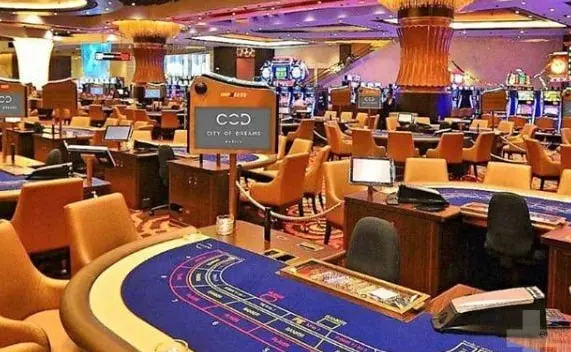
Why the Vendor Log Is a Crime Scene, Not a Report
Let me be brutally blunt: the standard SAS 6.x event stream pushed by most ETG cabinets is sanitized before it ever hits your system. The cabinet's internal controller batches, filters, and occasionally drops exception codes that would flag a meter discrepancy in real time. Auditors who only read the delivered SAS log are reading a summary written by the suspect. You need to tap the RS-232 or Ethernet line between the game controller and the Slot Accounting System host and capture raw exception codes — 0x21, 0x63, 0x77 — before the cabinet decides what you deserve to see.
Hardware Taps for Electronic Table Feeds
A proper interception rig costs less than a single day of unverified drop. You need a passive serial sniffer in-line on the SAS bus, a timestamping capture device with sub-millisecond resolution, and a parser that understands SAS command structure at the byte level. Do not rely on software agents running on the host — they see what the host sees, not what the cabinet transmits. The gap between those two realities is where electronic table feed manipulation hides, and it hides well because nobody wants to physically open a cabinet and clip onto a data line anymore.
The Signal Interception Architecture
Here is the architecture that actually works: passive tap on the SAS transmit and receive pairs, differential capture at the physical layer, then protocol-aware reassembly that flags every command outside expected timing windows. When a cabinet sends a meter update 400 milliseconds late, that is not network jitter — that is a command that was intercepted and held. When a game start signal arrives without a corresponding coin-in exception, you have found a ghost credit. The SAS protocol allows for this ambiguity, and racketeers know it. Your interception layer must log every 0x1F and 0x2F command pair and compute the delta between them. A delta that drifts over a 72-hour window is not random — it is a pattern, and patterns are evidence.
Auditing the Algorithm Behind the Feed
Electronic table games do not just report outcomes — they report the outputs of a pseudo-random process that is seeded, stepped, and occasionally reseeded through SAS administrative commands. If you are not capturing those reseed events and correlating them against payout spikes, you are missing the entire game. 😤 The interception rig must timestamp every reseed command and compare it to the theoretical RNG cycle length for that cabinet model. A reseed that occurs 1,200 spins early, followed by a 4.7 standard deviation payout cluster, is not luck — it is a backdoor, and it is sitting right there in the command signal. Audit the feed, not the report.
Real-Time Alerts and the Death of Retrospective Auditing
Retrospective auditing is dead. By the time your monthly reconciliation finds the gap, the money is gone and the cabinet has been swapped. Signal interception gives you real-time exception flags: unexpected hand-pay commands, meter reset requests without dual authorization tokens, and configuration writes outside maintenance windows. 😠 Each of these is a red flag that the SAS command stream is being used as an attack surface, not just a reporting channel. Set threshold alerts at 3 sigma on every meter delta, every command timing anomaly, and every reseed event. If your system cannot do this, you are not auditing — you are hoping.